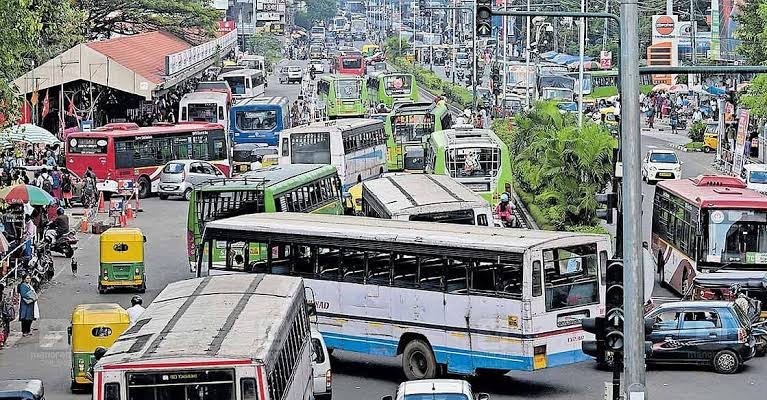
At the heart of Kerala's transport crisis lies the Kerala State Road Transport Corporation (KSRTC), a once-proud institution now drowning in debt. According to the state government's fiscal health report, the corporation's accumulated losses have reached a staggering ₹20,961.36 crore by the end of the 2024-25 fiscal year. Its net worth has been completely eroded, standing at a negative ₹19,820.63 crore as of March 2025. KSRTC alone accounts for 44.2% of the total net loss recorded by all 132 active public sector enterprises in the state.
The corporation is the single largest defaulter among Kerala's public sector undertakings, owing the government ₹11,678.64 crore in principal and interest arrears—a figure representing 46.38% of all loan arrears owed to the state by PSEs, municipal corporations, and cooperatives combined. Total liabilities exceed ₹17,235.47 crore. Even government assistance provided for paying salaries and pensions has been recorded as debt.
The human cost of this financial collapse is devastating. Delays in salary and pension payments have forced employees and pensioners to drag KSRTC to court. Some have resorted to the extreme step of ending their lives as the corporation could not ensure uninterrupted payment of their monthly pensions. At various points, petroleum companies have even threatened to stop fuel supply as unpaid bills mounted.
The Collapse of the Private Bus Sector
While KSRTC struggles, Kerala's private bus sector—once the backbone of the state's transport network—has experienced a catastrophic decline. Over the last decade, the private bus fleet has collapsed from approximately 35,000 vehicles to under 7,300. This leaves Kerala with roughly 0.50 buses per 1,000 people, among the lowest ratios for a state of its economic profile.
Experts trace this decline to a colonial-era regulatory architecture inherited from the Motor Vehicles Act of 1939, which artificially restricts private operators through a rigid permit system. Private operators with modern, well-maintained luxury fleets are confined to Contract Carriage permits, legally restricting them to single-trip hires for weddings, institutional tours, or pilgrimages. Picking up a ticketed passenger at an intermediate stop constitutes a permit violation. The result is a system that suppresses supply precisely when demand is surging.
The Priyadarshini Dilemma: Good Intentions, Unintended Consequences
The Congress-led Kerala government's flagship Priyadarshini scheme, offering free bus travel to women on ordinary KSRTC buses, was launched as a progressive welfare measure. Within its first month, approximately 3 crore women availed of the free service, resulting in subsidized travel worth an estimated ₹95 crore. Daily, 11 to 12 lakh women commuters benefit across 3,125 KSRTC ordinary buses. Female ridership surged by up to 40 per cent.
However, the scheme has deepened the financial crisis for both KSRTC and private operators. Daily revenue losses under the scheme are pegged at ₹3.5 crore, and KSRTC has received only ₹100 crore from the government—half of which was previously allocated budgetary support. The corporation is now exploring borrowing options after a request to increase its monthly overdraft limit was rejected.
Private bus operators report a steep decline in passengers as women desert private buses for free KSRTC services. Many private buses have either stopped operating or cut short services on numerous routes. Crew members, who operate on a collection-based system, are taking voluntary pay cuts—reducing daily wages from ₹1,200 to around ₹800 or ₹900—just to ensure owners receive some return. Nearly half of the private buses in the state have been adversely affected.
Autorickshaw drivers have also been hit, as women increasingly rely on KSRTC buses, depriving them of livelihood options.
A Crisis of Safety
The financial distress has translated directly into safety failures. On the Kuttiyadi ghat route, an overloaded Priyadarshini bus carrying more than 100 passengers—despite a seating capacity of only 54—narrowly avoided a major accident when its air brake pipe failed while travelling through a hairpin bend. The bus had started rolling backwards before the driver managed to steer it into a retaining wall.
On the Gavi route, KSRTC has been forced to cap passenger numbers at 55 amid recurring breakdowns. A 35-seat bus carrying around 70 passengers developed a mechanical fault deep inside the forest. Most buses on the route are over a decade old and routinely groan under loads far beyond capacity, with vehicles meant for 35 to 42 passengers often carrying nearly 100 during peak hours. With mobile connectivity absent across long stretches of dense forest, breakdowns can leave passengers stranded with little access to help.
These are not isolated incidents. Tourist buses have overturned, killing passengers and injuring dozens. School buses have run over children. A KSRTC bus involved in a collision killed six people. Dashcam footage of a KSRTC bus attempting a risky overtake has gone viral, sparking outrage over reckless driving.
Rail and Ferry Systems Under Strain
The crisis extends beyond roads. Trains in Kerala are severely overcrowded, with occupancy on popular routes consistently crossing 160 per cent. Passengers are travelling in packed coaches, hanging on footboards, or standing in toilet corridors. Around nine lakh people travel daily through the Southern Railway network, yet security arrangements remain inadequate.
Ferry services, crucial in Kerala's backwaters, are equally unreliable. Technical snags repeatedly disrupt roll-on roll-off (ro-ro) ferry services on the Fort Kochi-Vypeen corridor, leaving hundreds of vehicles and commuters stranded. A newly commissioned ro-ro service on the Chaliyam–Beypore route was suspended during its very first trip due to docking difficulties.
Industrial Action and Commuter Chaos
Strikes have become a recurring feature of Kerala's transport landscape. In July 2025, around 1,300 private buses stayed off the roads in Ernakulam alone, causing major hardship. In Thrissur, a near-total private bus strike forced commuters to rely heavily on KSRTC and private vehicles, leading to severe traffic congestion. Private bus owners have repeatedly warned of indefinite strikes if their demands—including timely permit renewals and student fare revisions—are not addressed. KSRTC incurred a loss of ₹4.7 crore due to a single nationwide strike.
What Lies Ahead?
The government has acknowledged the crisis. A white paper on KSRTC has been promised, and the Kerala Public Transport Urban-Rural Integration and Last-Mile Connectivity Scheme, 2025, has been notified, introducing 503 new routes. The Kerala Savaari 2.0 app aims to integrate metro, water metro, feeder buses, autos, and cabs into a single platform. AI-based scheduling is being explored to optimize routes. A sponsorship model allowing private branding on KSRTC buses has been proposed.
Yet experts warn that these measures, while welcome, are insufficient. What Kerala needs, they argue, is not another rescue package but structural reform—an independent regulatory authority that licenses, sets standards, and audits the sector on evidence, rather than on the balance sheet of one operator. A statutory Kerala Public Transport Regulatory Authority could dismantle the archaic stage/contract binary and issue unified permits, allowing KSRTC and private operators to compete against identical safety, emission, and frequency benchmarks.
Conclusion
Kerala's public transport crisis is a story of accumulated neglect, flawed regulation, and well-intentioned but poorly designed welfare schemes. The state that pioneered social welfare in India now finds its transport system—the circulatory system of its economy and society—on life support. Without urgent, evidence-based reform that moves beyond headline-grabbing schemes and addresses the structural rot at the core, the crisis will only deepen. For millions of Keralites who depend on public transport daily, the stakes could not be higher.